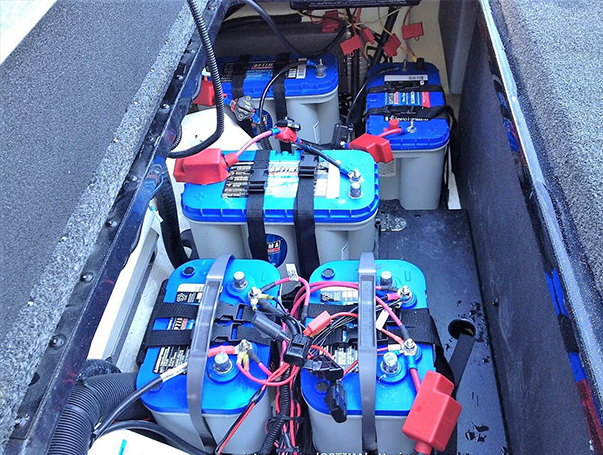













Marine Battery Care & Maintenance
The right care is essential to maximise the life of your Marine battery
If your passion is boating, then knowing what you need to ensure your boat is safe, enjoyable and comfortable is important. Whether you’re planning a day on the water or a longer sailing trip, one of the most vital components for ensuring safety and performance is your marine battery or batteries. If your batteries are in a low state of charge you could find yourself left stranded on the water in a boat that won’t start, which can be dangerous on the water.
People often think when they’re not using their boats that the battery or batteries will remain charged and be ready for when you next use them. The truth is batteries will discharge even when you’re not using them. That’s why you should always take precautions to ensure they are regularly tested and kept topped up with charge, using the correct battery charger, so your next outing or holidays don’t start with the disappointment of flat batteries or worse still, dead batteries.
When it comes to marine battery maintenance, you will first want to establish what type of battery or batteries you have? For instance, do you have a wet flooded battery? Or perhaps you have an AGM sealed battery, maybe even a Lithium option. While the basics are similar, we will help establish a basis for you to maintain these battery options. Another important thing to remember is your boat, yacht or watercraft will, in most cases, have a starting battery or batteries for the engines and also the domestic batteries for powering lighting, air-conditioning, fridges, radio’s and much more besides.
Regularly checking the level of charge in your batteries is good practice to ensure safety and to also achieve the best possible battery life.
Wet Flooded Battery
Your standard wet flooded battery is one that is filled with electrolyte (acid) and depending on whether your battery is open vented or fully sealed, will vary the level of maintenance required. During your scheduled maintenance of the battery you would want to keep the battery clean and make sure the terminals are free of any corrosion, as this can lead to many problems. If you need to clean your battery and the terminals, as well as the battery tray, then a mixture of water and baking soda is ideal. We advise you to regularly check the charge level in your batteries and charge as required, if you’re using your boat, yacht or watercraft regularly or you are hooked up to the marina mains power then it is likely you will have sufficient charge in your batteries but it is always prudent to check the charge level regularly. If you have an open vented battery, this means you have six screw in caps where you can access the inside of the battery to top up the electrolyte as and when required, it is important that you also regularly check the electrolyte level in your battery, and add distilled water when it’s needed, making sure there’s enough to cover the battery plates.
If you use your boat, yacht or watercraft all year round then sticking to the above will help get the most out of your batteries, however if you are planning on storing your boat, yacht or watercraft over the winter or for an extended period then please see storing your marine batteries.
AGM Battery
When it come to maintaining your boat, yacht or watercraft marine batteries that has AGM technology, you’ll be pleased to know there isn’t as much maintenance to do as with a wet flooded battery. This is because AGM (Absorbed Glass Mat) batteries are fully sealed and so once they have been activated from new, they are closed and as such they don’t require any electrolyte or water. All of that said, you will still need to regularly check the charge level in your battery and charge as required. Also keeping your battery and terminals clean and free of corrosion will prevent many problems from occurring, especially important when around sea water due to it’s corrosive nature. When cleaning your battery, terminals or the battery tray then using water and baking soda is a great solution.
Lithium Battery
As with the AGM battery, there is relatively little maintenance to do on Lithium batteries unlike the wet flooded lead-acid battery. It is true that Lithium batteries can be stored (when not connected to an application) for long periods of time without seeing the drop in voltage you would see with lead-acid batteries, however, this is when they are disconnected from onboard equipment. If you have your Lithium batteries connected to your boat, yacht or watercraft, then just like lead-acid batteries, you will see a parasitic drain over time from the connected onboard equipment and as such you must make sure you regularly check the charge level of the batteries and charge as required. When storing Lithium-ion batteries, disconnect the batteries from the vessel and immediately charge the batteries on a Lithium battery charger, the batteries can then be happily stored for up to a year. When you wish to use the batteries after storing them, put them on charge again to make sure you have full power prior to use. Also keeping your battery and terminals clean and free of corrosion will prevent many problems from occurring especially important when around sea water due to it’s corrosive nature. When cleaning your battery, terminals or the battery tray then using water and baking soda is a great solution.
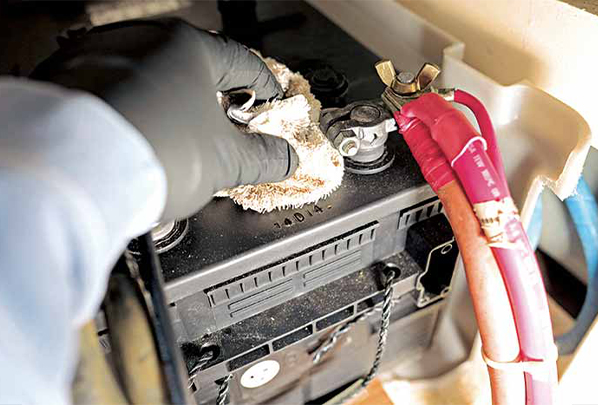
Storing Marine Batteries Over The Winter
Once you have finished using the your boat, yacht or watercraft for the season and it’s time to put it away for the winter, there are some things you want to do to make sure your vessel is in the best possible condition for storage, this includes your batteries. Firstly you’ll have wanted to thoroughly wash and dry your vessel also cleaning and removing any salt or dirt that has built up around the batteries, keeping this area clean will help increase battery life as salt water is extremely corrosive. Next you will have to prepare for the winterisation and you may have your local dealer taking care of this for you, but if you’re doing it yourself then part of that process is preparing the batteries and below we have some great tips to ensure you don’t have to purchase another battery or batteries for next season. When removing your batteries from your vessel store them in a cool dry place, we would highly recommend carefully reading the owners manual, this will let you know the tools that you’ll need and the correct process they recommend as this may vary from model to model.
- Always make sure you are wearing safety protection glasses for your eyes and gloves for your hands. Latex gloves can provide the dexterity that you need whilst protecting your hands.
- Before starting, make sure you have the tools you’ll need. Items such as: a torch, rags, socket set, extension bar, screwdriver, cable ties and some solution of water and baking soda for cleaning any corrosion.
- Locate the area the batteries are stored, if there’s a battery box then carefully remove the lid, if your battery is not visible please check your user manual to locate it.
- Once you have access to the batteries make sure you have a diagram of how they are located and connected for when you need to re-install them.
- Pull back the rubber cap from the battery’s negative terminal (Black), using a Philips screwdriver or wrench if the terminal has a nut, unfasten the bolts connecting the negative battery cable from the negative terminal. Once the bolt has been removed, free the battery cable from the battery.
- Repeat the previous step for the Red positive terminal.
- Remove the hold-down bracket by undoing the bolts securing the batteries in place.
- Remove the batteries from the vessel. Clean the battery and terminals, check for any damage and place the battery on charge, you will want to store the battery fully charged, in a cool, dry safe place out of sunlight.
- Remove dirt from the batteries location, this maybe a battery box, housing or tray in the vessel and clean the area, making sure the terminals on the end of the battery cable are clean and free of dirt or corrosion.
- Once a month check the battery charge level and top up where necessary, if you have a wet filled battery then check the acid/water level and top up with distilled water as required. Make sure this fluid never falls below the lower-marker level.
Checking The Charge Level
Most modern boats, yachts and watercraft have a built-in battery monitor, however some of the older models may not. We recommend checking your battery charge levels with a voltmeter or multi-meter, below we have a quick reference chart to assist your checks.
Prior to taking the readings, ensure all electrical appliances and systems are switched off.
Meter Reading Approximate Charge Level
12.7V or above 100%
12.5V 75%
12.4V 50%
12.2V 25%
12V or less Discharged